Entries
A new entry goes up every other Thursday. They are listed here with the most recent first.
Last updated .
Where do the first entries start?
Entries so far: 12, newest at the top.
Any figure in an entry links to the document it comes from: a standard's own text, a federal or state rule, or a peer-reviewed paper. Where an entry counts what sellers print, it states how many pages were read and on what day.
Common questions
How often are new entries added?
Every other Thursday, and older entries are revised when a rule or a standard changes.
Where do an entry's figures come from?
From the document linked beside each one: a standard, a regulator or a peer-reviewed paper.
Change log
: first published
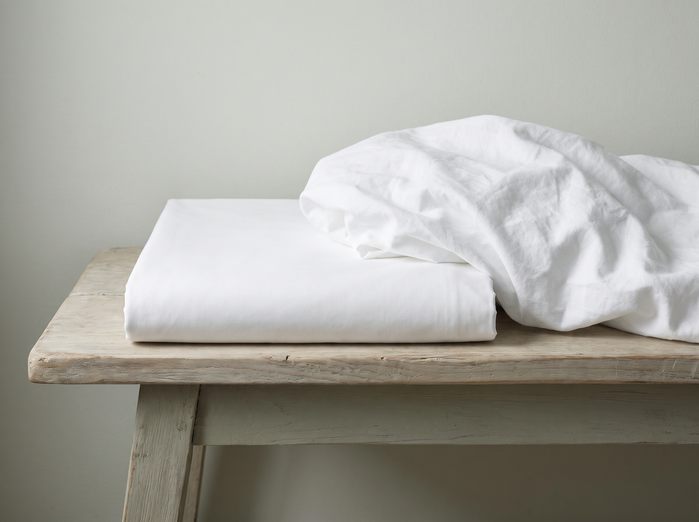
Why is formaldehyde used on wrinkle-free bed linen, and how much can stay in the fabric?
Formaldehyde is used to make the resin that locks cotton fibers in place so your sheets come out of the dryer flat, and a little of it can stay in the fabric you sleep on.
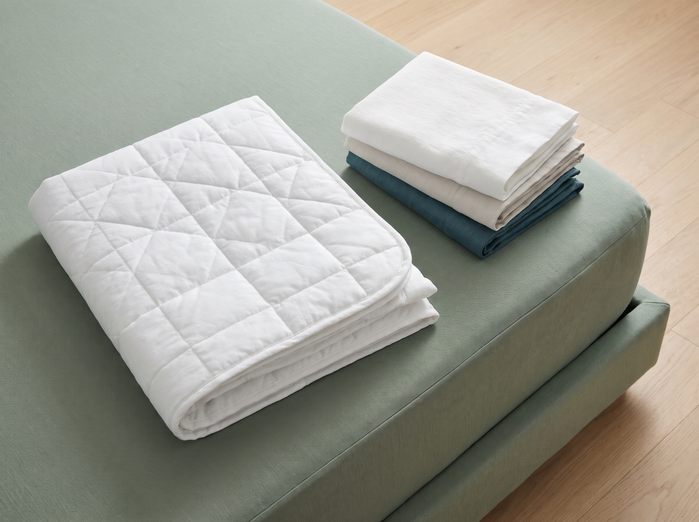
Which US states restrict PFAS and other added chemicals in bedding, and from what date?
PFAS are the fluorinated chemicals behind many water-resistant and stain-resistant fabric finishes. Our guide to what PFAS are and why some bedding fabrics carry them covers the chemistry, and this page covers the law: which states keep them out of the bedding sold there, and when each rule starts.
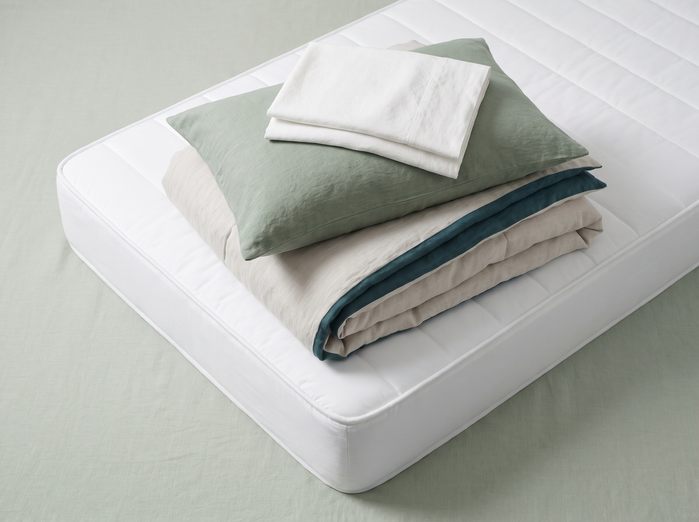
Which added chemicals can non-toxic bedding leave out, layer by layer?
Bedding can leave the factory with finishes, residues and treatments on it that you can't see on the finished product. This guide sorts them by product and names the rule, if there is one, that limits each.
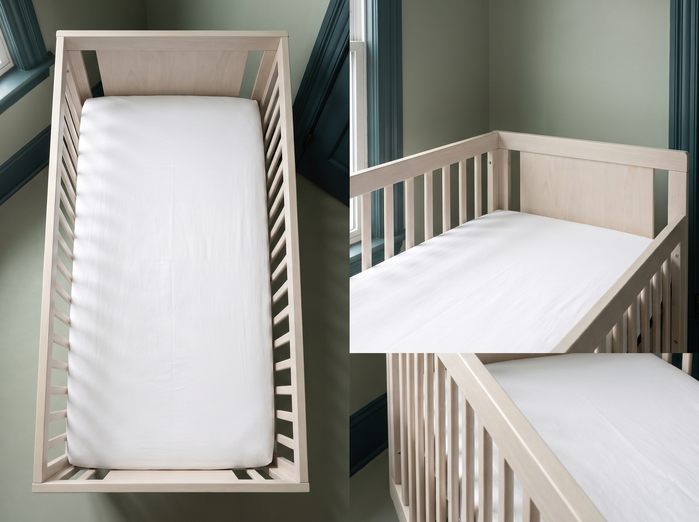
What makes crib and toddler bedding non-toxic, and why are the limits stricter for babies?
Crib bedding has tighter chemical limits than adult bedding because a baby's body takes in more of whatever a fabric carries.
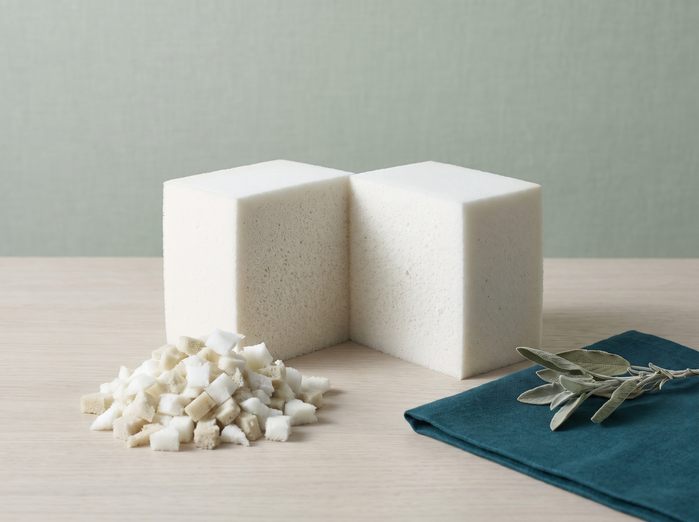
What is in polyurethane foam bedding, and what does a CertiPUR-US label test?
This page covers what goes into polyurethane foam, memory foam included. It also covers what the CertiPUR-US label on your foam bedding checks and what it leaves out.
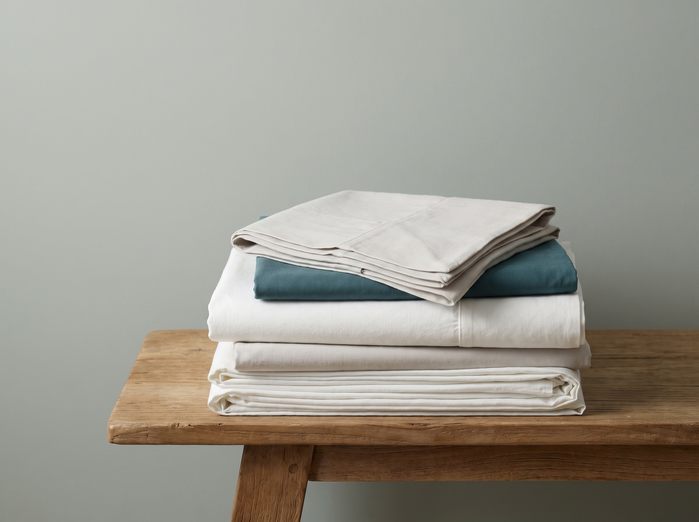
What does OEKO-TEX STANDARD 100 test bedding for, and what does it leave out?
OEKO-TEX STANDARD 100 is one of the labels you will see most often on sheets, pillowcases and duvet covers sold in the US. It is a lab check of the finished item for harmful substances, not a promise about how the item was made. This page covers what the test checks, what it never looks at, and what sellers print about it. It is part of our guide to what non-toxic bedding means.
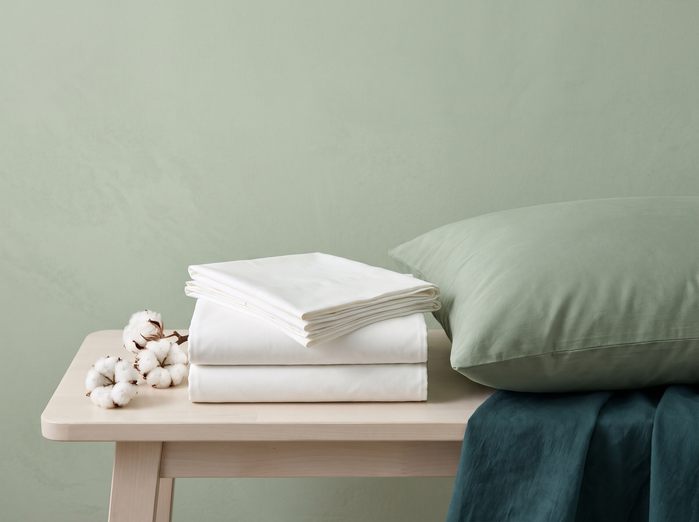
What does non-toxic mean on a bedding label, and who decides?
The word "non-toxic" appears on sheets, pillows, duvets and mattress protectors sold across the United States. This entry explains who makes the rules around the word and what evidence lets you check it. It sits under our broader page on what non-toxic bedding means.
What does a complete non-toxic bedding label state, line by line?
A complete label states every line the law requires. It also backs any non-toxic claim with a named standard, the body that issued it, and a number you can check yourself.
What are PFAS, and why do some waterproof and stain-resistant bedding fabrics carry them?
PFAS are a large family of man-made fluorine chemicals, and some bedding carries them because a fluorinated finish helps fabric shed water, oil and stains.
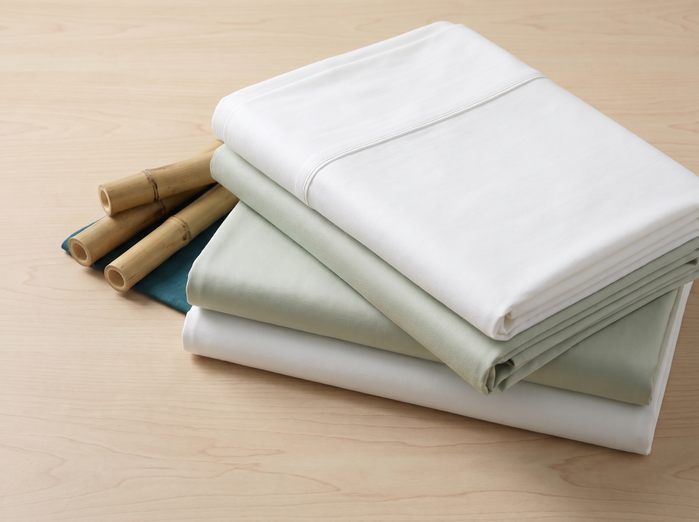
Is bamboo bedding non-toxic, given how viscose rayon is made?
Bamboo sheets are almost always viscose rayon spun from bamboo pulp. That means most of the toxic story happens in the factory, not in your bed.
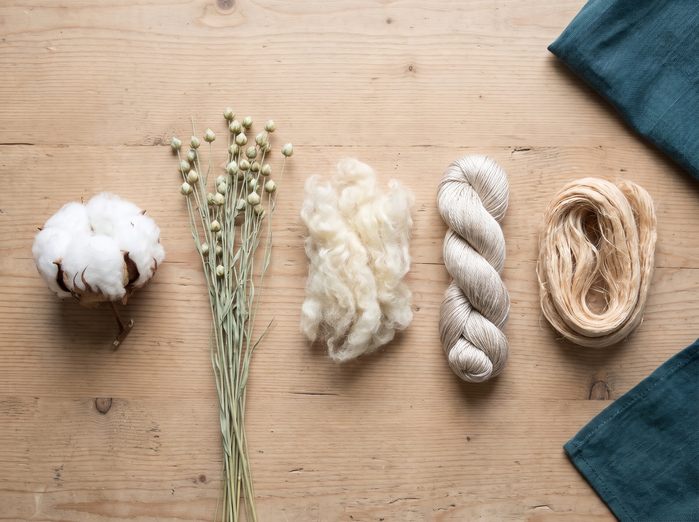
How does each bedding fiber compare on the chemicals used to grow it and turn it into cloth?
Every fiber in your bed met chemicals somewhere between the field and the shelf. What differs is the stage. This page follows cotton, linen, wool, silk, polyester and the wood-pulp fibers one at a time, so you can see where each one picks up its load. It sits under our main guide to what non-toxic bedding means.
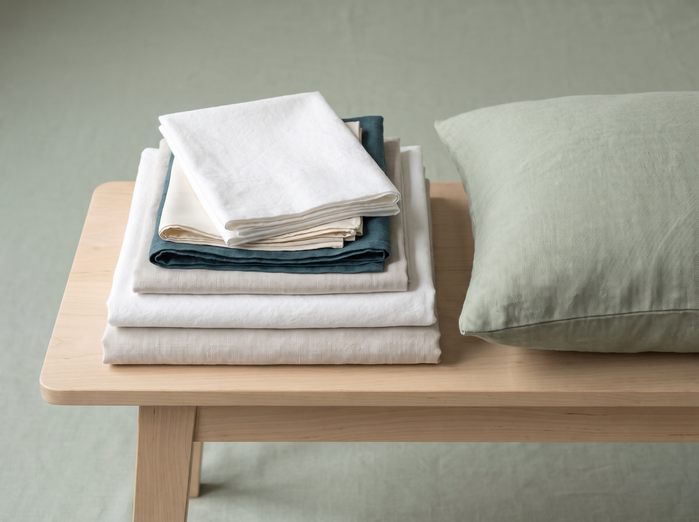
How do GOTS, OEKO-TEX, GREENGUARD and MADE SAFE differ in what they check?
Each of these four labels checks a different thing, so one logo on your bedding can never stand in for another. This entry belongs under our guide to what non-toxic bedding means, and it maps the four certificates that the other entries keep coming back to.